The steering fluid is a vital part of steering and handling maintenance of a used vehicle. It is extremely important to have a good upkeep of your steering liquid in order to avoid any steering jam or rusty functioning. The steering liquid is crucial as it is imperative to ensure the safety of you and your family while driving. The steering liquid is one of the most important checks to be made amongst others while servicing your vehicle. There are some evident signs to lookout for while checking and changing your steering fluid.
The dipstick
Once you have located the reservoir cylinder under the bonnet of your vehicle, you must use a dipstick in order to check the levels and color of the steering fluid in the reservoir cylinder. Typically, dipsticks would be part of your car purchase, or else it is easily available at any automobile store. Once you have the dipstick, dip it into the cylinder and check the level of steering fluid. Always subscribe to the levels suggested in the owner’s manual. Once you are done with the level, check the color of the fluid. If it is too dark, change the liquid and fill in a new batch which should be a dark amber color.
Funnel it
Use a funnel to add fresh steering fluid according to the recommendations in the owner’s manual.
It is not necessary to take your car to your mechanic for each and every repair. There are certain repairs that you can do by yourself. It will save you money and time. A few of the easiest car repairs include replacing a fuse, replacing the wiper blades of your car, replacing the light bulbs, replacing the air filter, keeping the brake/clutch fluids at the optimum level, and so on. You can use your car manual for guidance. You will also be able to find many DIY car repair resources online as well. Plenty of ‘how-to’ guides are also available in the market for your reference. On top of that, some of the staff members in the auto parts store would also be able to help you to change out the parts that you just purchased from their store, right there in the parking lot.
Another advantage (apart from saving money and time) of learning a few basic repairs is that, if your car breaks down in the middle of nowhere, you will be able to fix the problem yourself and be on your way, as long as the problem is minor and something that you could fix. Always keep some basic tools like screwdrivers, screw holders, wrenches, pliers, and so on in your vehicle. Also, do not be afraid to get your hands dirty.
The transmission is an important piece of machinery in your vehicle. In fact, it is only second to your vehicle’s engine. The repairs as well as replacing the part is a costly affair. Take care of it properly and you will be able to avoid unnecessary repairs and extend the life of your vehicle’s transmission. Following tips will help you to take care of the part properly.
Service the transmission periodically, every 2 years or 30,000 miles. Do an overall transmission flush (including cooler lines, transmission cooler, and the torque converter) every 40,000 miles. If possible, make bands adjustment every 60,000 miles. This may be costly, however, in the long run, it will be worth it.
The fluid can go a long way in extending the life of your transmission. Check the fluid on a regular basis. If you are using a petroleum-based fluid, consider upgrading to synthetic fluid. They hold up much better to heat. Over a longer period of time, they hold up much better to their properties as well. Keep in mind that it is vital to use the right type of fluid for your vehicle.
Add an additional filter to the cooler line. It will help to provide an extra protection to the fluid from contaminants.
A transmission cooler of good quality, preferably one with a built-in fan, will provide extra protection to the transmission. Heat is bad for transmission. Keeping the transmission as cool as possible will help to prolong its life. It is also important to maintain the cooling system. Service it every 2 years. Maintenance should include radiator cap pressure test, thermostat check, inspection of belts and hoses, checking for damage and leaks, checking the coolant levels, and antifreeze replacement.
Buying a car is serious business, and it can be an intimidating process. If you're considering purchasing a used car, things can get even trickier. Not all dealers have reputable sales methods. For this reason, it's important to understand the used car-buying process and ask the right questions.
Is this car in my budget?
The first step for any potential car buyer is to determine how much they can afford to spend. It's a smart idea to compile a list of cars you are interested in to get insurance quotes, check tax rates and compare payments. This will help you narrow down your list to vehicles that will fit comfortably in your predetermined budget. Remember that selecting a car you can't afford can lead to poor credit and other negative consequences. Consult with a financial advisor if you need help establishing a budget.
Does it have a vehicle history report?
Before you purchase a car, you should run a vehicle history report. All you need is the Vehicle Identification Number to determine if the purchase you are about to make it a good one. These reports will outline the vehicle's past ownership. The Department of Motor Vehicles also reports that these will also tell you if the car has ever had maintenance done, if there have ever been problems with the title, if there are any liens on the vehicle, if the car was ever involved in an accident and whether the car has ever been classified as a "lemon." A vehicle history report will ensure that the used vehicle you select will operate as you expect it to.
Asking these questions will help you get the best used car in your budget.
Did I notice anything unusual in the test drive?
The test drive is another important part of the car-buying process. It allows you to get behind the wheel of your desired car and see how it handles. A test drive will also alert potential buyers to any issues before a sale. During a test drive, you should be vigilant for any problems with performance. Your test drive doesn't end once you return to the car lot, though. You should open and close all doors, windows, the trunk and the hood to make sure that they operate properly.
Am I getting this car for the best price?
Everyone wants to make sure they are getting the best price when buying a car, but to guarantee this, you must do a little research. Online price guides will tell you how much the model year is worth, but it's up to you to negotiate the true value. If the car has had significant work done, it is usually smart to talk the price down.
Buying your first used car may seem like an overwhelming experience. However, if you educate yourself and ask the right questions, you will find yourself in a much better position to purchase the used car of your dreams.
To find used cars that are reliable and affordable, click here.
As the weather warms up and schools close down, road trip season approaches. Summer brings with it those few months out of the year when families are able to pack up the car and hit the open road. Yet, before you and your loved ones make the journey to your favorite destination, you need to make sure your car is as prepared as you are. Take a look at the checklist below to ensure your vehicle is ready or your road trip.
Familiarize yourself with your vehicle
Taking the time to learn about your car can save you trouble and confusion down the road. If you are able to identify important features and know how to perform basic maintenance, you will be more prepared to handle a breakdown or other issues during your trip. You should also know what type of oil your car takes and on which terrain it drives best. This information will make your trip much less stressful.
Get a checkup
Taking your car to a professional for a checkup is one of the best things you can do before going on a long journey. A mechanic's trained eye will be able to spot leaks, cracks and other issues that could cause problems on the road. At your checkup, be sure the mechanic checks the levels of all fluids, tests the breaks and examines the engine for any irregularities. He or she should also replace headlights and air filters as needed.
Getting an inspection by a professional will ensure your vehicle is safe for the road.
Take a look at your tires
Nobody wants a vacation spoiled by tire trouble. Before you begin your trip, examine all the tires on your car for signs of damage. If the treading is worn down or the rubber has begun to split, it is a smart idea to replace your tires before you begin your journey. You should also check the tire pressure and alignment. When your primary tires are set, inspect your spare. It should also be properly pressured and free of damage.
Pack an emergency kit
Anything can happen on the open road. For this reason, an emergency kit is a vital part of preparing your car for a road trip. The Department of Motor Vehicles recommend that your kit include road flares, a tire jack, a first-aid kit, jumper cables, a blanket, a flashlight and bottled water. Click here for the full list.
Consider GPS
If your vehicle does not have built-in navigation capabilities, you should think about purchasing a GPS system. This ensures that, even if you have no cell phone service or map, you will be able to navigate your route with confidence.
A road trip is a great way to spend the summer, but don't let car problems get in the way of a good time. By following the checklist above, you can help ensure that your vehicle is prepared for whatever journey lies ahead.
Even if you’ve found a used car that fits within your budget, there are a number of separate expenses you need to consider. Between licensing, registration, maintenance and fuel, you’re going to be putting a lot of hard-earned cash into driving. Insurance is another cost you need to keep in mind, and it’s one that varies by hundreds of dollars, according to the Insurance Information Institute.
While you can’t avoid paying for insurance by any means, there are a number of ways you can lower the costs and save yourself some money.
1. Do your research and shop around
Because each company provides a different price for car insurance, it’s in your best interest to shop around. Taking the time to do research online, asking for referrals or even calling the company to discuss straight-forward prices can really cut back the expenses. Gather quotes from multiple companies and sit down and compare before making any decisions. You can also call your state insurance department for information – they might even be able to recall customer complaints for certain companies. Overall, doing your research before settling with an insurance company can really save you money – and headache – in the long-run.
2. Establish good credit
Maintaining a good credit score has a number of benefits – it lowers interest rates on loans, approves you for higher limits on credit cards and it even gets you better insurance rates, according to the Huffington Post. Many auto insurance companies use credit information as a platform to price auto insurance. Make it a point to establish and maintain a good credit score, and frequently check up on it to make sure there are no flaws in the information.
Check your credit score frequently to make sure your maintaining a good standing.
3. Drive safely
This one may seem like a no-brainer, but it’s a simple way to lower your insurance, according to Kelley Blue Book. People with clean driving records can often qualify for discounts, while those who drive recklessly and have been in more accidents see spikes in their insurance rates.
If you want to lessen the likelihood of an accident occurring, the source recommended driving less in general. Low mileage discounts are offered by most insurance companies, so consider carpooling with a family member or friend to work. This can save both of you miles and money.
4. Increase your deductible
By raising your deductible, you’ll have to pay more out of pocket if an accident occurs. However, you could save anywhere between 15 and 40 percent in collision coverage costs if you increase your deductible by a few hundred dollars. It might seem like a large expense to begin with, but it’s an excellent decision to make for long-term costs.
“Companies will help you save money if you’re willing to combine policies.”
5. Combine policies
If you already have homeowners insurance with a certain company, it’s in your best interest to go through the same company for your auto insurance, according to Bankrate. If you go through a different one for each policy, you’re bound to be paying higher expenses than you should. Insurance agent Art Scott told the source that companies are more likely to work with you to save money if you choose to combine policies with them.
“The more lines (of insurance that insurance companies) can get, the more they’re willing to give discounts for it,” he said.
6. Ask about discounts
There are so many different ways for drivers to get insurance discounts, according to III. Some companies offer lowered rates for drivers who have not been in accidents during a certain period of time. Others even offer discounted rates for drivers who have take a defensive driving course. If you’ve committed to a certain insurance company, dig deep to find out how you can save money with them as a policyholder.
Whether you’re interested in buying a new used vehicle or you’re searching for a car for a loved one, head to NJ Auto Auction, where you’ll find a lot full of Carfax-certified rides to choose from.
You know your car better than anyone else. You will be able to feel it if there is something wrong with it. It is important that you note down each and everything whenever you feel something wrong or different with your car, no matter how small or silly, if you are serious about saving money in car repairs. If you notice a burning smell, note it down. If you notice a slight vibration in the steering wheel, note it down. If you hear a sound not associated with the normal functioning of your car, note it down. Also, note down when it happens, for instance, when you are going over a certain speed or climbing a hill, and so on. Note down how many times it happens as well. Keeping a log like this will help you to effectively communicate with the auto-mechanic whenever you take your car for repairs.
It is very important that you effectively communicate with your car mechanic. Agreed that he/she is much more knowledgeable about vehicles in general than you, however, the more information you could provide him/her about your car, the more efficient they will be able to work. You may think that a small clicking sound coming from the engine room may be too small or silly a reason to mention to the mechanic, but it may actually help to save you a lot of money. The reason why it is important to mention that small clicking sound is that, to the mechanic who deals with all kind of car problems day in and day out, that clicking sound may be significant. He/She may be able to directly go to the source of the problem, instead of working all around the problem and finally finding it.
Several car owners are not aware of different aspects of tire maintenance. The periodic rotation of tires is very important to keep your tires in good shape for a long period of time. How does tire rotation help? Well, according to automotive experts, the primary objective of regular tire rotation is to ensure that the tires wear out uniformly. You can check for a rotation period and pattern in your vehicle owner’s documentation or otherwise rotate the tires after every six thousand miles at the minimum.
It isn’t a good idea to include the temporary spare in a tire rotation. This is because the spare is kept exclusively for emergency use. However, always check if the spare tire has sufficient air in it.
Even though it is recommended to undertake tire rotation after every six thousand miles, you could do it earlier if there is development of uneven or irregular wear on the tires. You can consult a certified alignment store or tire dealer to establish the wear issue cause. It is crucial to know that powerful impacts like hitting potholes have the potential of causing misalignment. This eventually results in an uneven wear on the tire.
You will find that certain tires such as those with uni-directional or asymmetric tread structures might not fit into the typical rotation patterns. You can consult a professional to get help with such tires. Visit the New Jersey State Auto Auction to know more about vehicle functionalities.
If you’ve just purchased a new vehicle or are looking to replace the old tires in your existing vehicle, there are various ways to go about it. The simplest way, of course, is to buy the exact size and structure of tires (matching the original dimensions). Besides that, you could also think about opting for better quality tires which can enhance dry and wet handling.
The first step in replacing tires is perhaps determining the tire size. You can visit the old tire dealership (from where you bought the original tires) to get them replaced in the exact same size. The tire’s sidewall can also be checked for size identification. Besides this, the manual in the vehicle will give you information regarding the tire size.
If you select a tire belonging to the immediate lower profile, it is possible to significantly enhance riding quality and vehicle handling. Choosing a bigger sized tire or upsizing is becoming quite popular, especially among truck and SUV owners. This is primarily because wider and taller tires help in improving ride quality as well as performance. As far as trucks are concerned, larger tires could enhance cargo carrying capacity, appearance and traction.
For owners who need to replace just a single tire, it is a good idea to choose a replacement tire from a similar brand, load capacity and speed rating. This way it will match the specifications of the other three tires. Visit the New Jersey Auto Auction showroom to get more information about tires for your vehicle.
Many car owners are confused about how often to fill air into the tires of their vehicle. The answer is actually quite simple. It is advisable to check the tire pressure at least once every month (according to the U.S. Tire Manufacturers Association). However, checking the tire pressure each time you stop for fuel is a proactive measure you can take as well.
The maintenance of suitable inflation pressure in tires helps in the optimization of fuel economy and tire performance. With the correct tire pressure, the driver can experience comfort, performance and durability that match the requirements of the vehicle.
It is important to know that tire pressure will change over a period of time. The change in temperature also has an impact on tire pressure. If you avoid checking tire pressure on a regular basis, you could end up with a puncture at any odd time and find yourself stuck in a difficult situation. It is very common for car tires to come in contact with foreign objects such as screws, nails and other sharp items which in turn can cause them to lose air.
When checking the pressure in your car tires, ensure that they are “cold”. This means you need to check the pressure before they get heated up due to driving. For more information on tires and tire inflation, visit the New Jersey State Auto Used Cars showroom.


 Asking these questions will help you get the best used car in your budget.
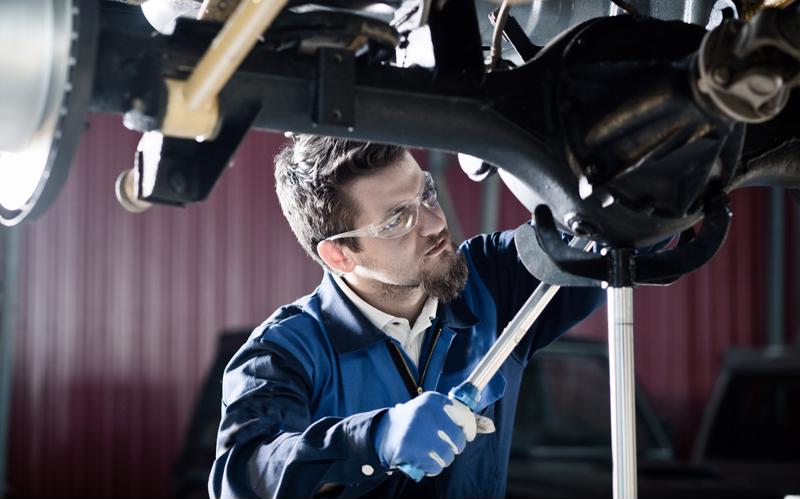 Getting an inspection by a professional will ensure your vehicle is safe for the road.
 Check your credit score frequently to make sure your maintaining a good standing.


